Research: Data Visualization
Life Cycle Assessment (LCA)

LCA is a method that analyzes the environmental impacts of a product over its lifetime, from the extraction of raw materials to their eventual return to the Earth. It quantifies environmental loads, such as energy use, raw material extraction, processing, pollution, human health hazards, transportation, and emissions and wastes generated. LCA methodologies are extremely useful for understanding what components or phases of the production cycle have outsized impact, for example, use of an energy intensive material or the footprint of the product’s transportation or disposal. In the above example, a biocomposite chair made entirely from local resources was evaluated using the IDSA's Okala single-factor LCA Method.
Dashboarding and System Mapping
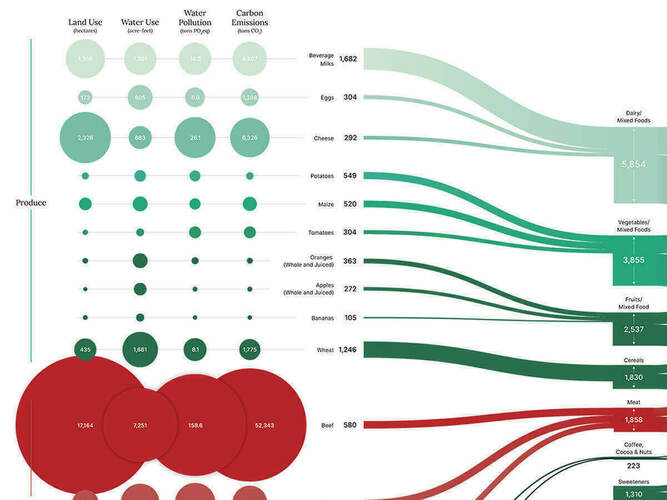
“Flows and Footprints” is a series of visualizations and interactive tools that track materials and financial data. ND’s 2019-2020 waste tonnage is combined with databases from the USDA, EPA, and global agriculture surveys to create a theoretical framework that may be updated easily with local data. Through collaborative sessions with the Office of Sustainability, Food Services, and Waste Management, a digital prototype was built to simulate administrator workflows in event planning and budgeting.